The Legend of Zelda LEGO Sets: Exploring Potential Themes
The Legend of Zelda and LEGO: two beloved franchises with passionate fans around the globe. The notion of these two worlds colliding to create The Legend of Zelda LEGO sets tantalizes the imagination. In this article, we explore potential scenarios for how LEGO could bring the rich universe of The Legend of Zelda to life, drawing inspiration from how they’ve approached other iconic franchises. We examine four distinct scenarios: echoing The Lord of the Rings sets, addressing possible underperformance, considering a strategy of minimal diversification, and exploring the idea of a detailed playset theme. Each approach has its unique merits and challenges, and we delve into the possibilities and implications of each strategy, setting the stage for future prospects in the LEGO landscape.
55 comments on this article
Discussion around potential Legend of Zelda LEGO sets is vibrant within fan communities, with a staggering number of enthusiasts eager to share their perspectives. This section is a melting pot of ideas, providing valuable insights that broaden our understanding of what fans truly desire. As we examine four potential LEGO strategies, this collective wisdom highlights the community’s thoughts.
Some fans rally around the idea of large, detailed sets that echo the grandeur of Hyrule’s landscapes, while others advocate for a series of smaller sets that capture the diverse aspects of Link’s adventures. The comments also reflect broader concerns about licensing agreements and creative liberties that LEGO would undertake in adapting such a beloved series.
These passionate discussions underscore a keen interest in seeing LEGO take on this iconic series, fostering a sense of anticipation. As we explore these four scenarios, it’s clear that any potential partnership between LEGO and The Legend of Zelda has a ready and eager audience.
Scenario 1: The Lord of the Rings Method
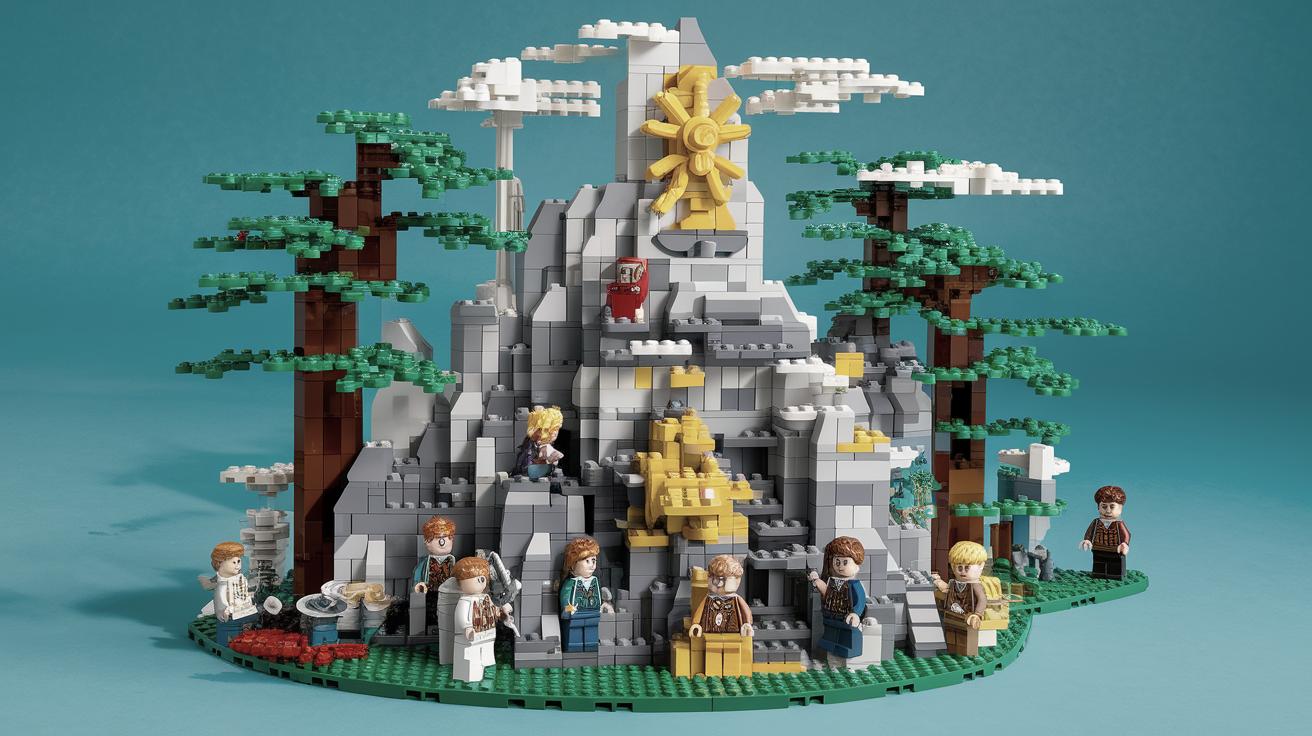
In this scenario, LEGO could adopt a strategy similar to its approach with The Lord of the Rings series. By focusing on iconic locations and battles from The Legend of Zelda games, LEGO could create large, intricate sets that allow fans to experience the saga of Hyrule in brick form. This method capitalizes on the rich lore and memorable settings, such as Hyrule Castle or the Temple of Time, and would appeal to long-time fans.
Such sets could include mini-figures of various characters, from Link and Zelda to Ganon and more obscure choices like Midna or the Koroks. The emphasis would be on recreating the epic scale of battles and pivotal moments in the series, lending itself to a collection of flagship sets for each major game installment such as Ocarina of Time and Breath of the Wild.
While these sets would likely become central pieces in any LEGO collection, the potential downside is the high price point and limited appeal to casual fans or younger builders. However, for devoted enthusiasts and collectors, such an approach would offer an immersive and detailed journey into the world of Zelda.
Scenario 2: The Tree Underperforms
An alternative scenario considers the potential challenges in market performance. Despite the popularity of The Legend of Zelda, there’s a possibility that the sets might not perform as expected due to oversaturation or lack of sustained interest. Here, LEGO could choose a cautious path, limiting the number of themes or licenses to mitigate financial risk.
In such a case, LEGO might prioritize smaller, affordable sets that depict key items or characters from the franchise. These sets, while less ambitious in scope, could appeal to casual fans and younger audiences, ensuring accessibility and sustained interest through price and playability.
This approach would require strategic marketing efforts to reignite enthusiasm in potential fans unfamiliar with the series. By focusing on engaging and widely recognized aspects of the games, LEGO could potentially overcome initial hurdles and still capture a significant portion of the target demographic.
Scenario 3: Minimal Diversification
Another viable strategy could involve minimal diversification, focusing on one singular aspect or era of The Legend of Zelda universe. By choosing a specific game, such as Breath of the Wild, LEGO could maintain a consistent theme and aesthetic across multiple sets. This could provide a coherent narrative experience, allowing fans to recreate and expand upon their adventures with Link.
By concentrating on a single game, LEGO could ensure high-quality, detailed models that capture the essence of the chosen title. This method could build a dedicated fan base that is particularly invested in that era of Zelda lore, potentially resulting in expanded future sets around this universe.
This approach reduces the complexity of balancing multiple games while still offering an immersive experience. However, it risks alienating fans who prefer other storylines, like those from A Link to the Past or Twilight Princess. Careful selection of the theme and its universal appeal would be crucial for success.
Scenario 4: A Playset Theme
Perhaps the most playful option is to introduce The Legend of Zelda as a series of playsets designed for creative construction and storytelling. This method encourages imaginative play and builds on the simplicity and charm of its source material. Playsets could include locations like Kakariko Village or the Gerudo Desert, fostering dynamic interactions between characters.
By making sets that are modular and easy to customize, LEGO could encourage fans to create their own versions of Hyrule and beyond. This format offers a broad canvas for expansion, opening opportunities for fans to propose their own ideas through platforms like LEGO Ideas. It thrives on community engagement and the potential for constant reinvention.
Although this method might not cater as strongly to collectors seeking precise recreations, it captivates a younger audience and fosters a spirit of creativity. The diverse and endlessly adaptable playsets champion the core strengths of LEGO: play, customizability, and storytelling.
Future Prospects
| Scenario | Description | Potential Advantages | Challenges |
|---|---|---|---|
| The Lord of the Rings Method | Large, detailed sets showcasing iconic locations and battles. | Appeals to long-time fans; immersive detail. | High price point; limited appeal to casual fans. |
| The Tree Underperforms | Focus on smaller, affordable sets to mitigate financial risk. | Affordable; attracts casual fans and younger audiences. | Requires strong marketing; may lack depth for enthusiasts. |
| Minimal Diversification | Focus on a single game’s universe for coherent narrative experience. | High-quality, detailed models; dedicated fan base. | Risk of alienating fans of other game eras. |
| A Playset Theme | Creative playsets allowing for modular construction and storytelling. | Encourages creativity; broad appeal and adaptability. | May not satisfy collectors; focuses on imaginative play. |